
Research type
Product Keyword Research
One product was taken at a time and researched around its related search terms, questions and keyword variations.
A product-focused keyword research process used to understand what people were searching for, uncover relevant keyword opportunities and create clearer targeting for future SEO work.
The website had limited search positioning at the time, so the research started at product level rather than assuming which keywords should be targeted.
Real client work: This research structure reflects the process used on real engagements, including product and marketplace keyword work delivered for Harmain Global and freelance clients. Findings below are illustrative of the method rather than one specific client's report.
One product was taken at a time and researched around its related search terms, questions and keyword variations.
Identify relevant searches that could support stronger page targeting and future organic positioning.
Earlier technical issues had affected indexation, so the website had little useful search positioning to build from.
At the time of the research, the website was not yet strongly positioned in search and some pages had previously been affected by technical and indexation problems.
That meant existing rankings could not be treated as the main source of direction.
Instead, the process started with the products themselves: understand what each product was, discover how people searched around it and then build a more reliable keyword set from multiple sources.
The research did not depend on a single SEO tool. Several sources were used together to discover, compare and refine product-related search opportunities.
The process began with a specific product so the research stayed relevant instead of collecting broad keywords that had little connection to the actual offer.
AnswerThePublic was used to explore questions, phrases and related search patterns around the product and its wider topic.
Semrush was used to uncover additional keyword variations, related terms and broader search opportunities connected to the product.
Google Keyword Planner helped compare search demand and identify which keyword ideas had enough relevance to deserve further attention.
Google Trends was used to understand how interest changed over time and to compare related terms where seasonality or changing demand could matter.
The strongest keyword ideas were organized into a more practical set that could later guide page optimization, content planning and broader SEO work.
Each platform contributed a different type of information, helping reduce dependence on one source and making the final keyword set more useful.
Used to explore product-related questions, phrases and topic variations people may search for.
Used to expand keyword ideas and identify related search terms around the selected product.
Used to compare keyword demand and help prioritize terms with stronger relevance to the product.
Used to compare interest patterns and understand whether demand changed over time.
The supporting visuals focus on the keyword research itself: raw discovery, comparison and the organized keyword set that came out of the process.

Product-related phrases, questions and keyword variations were collected from several research sources.

Search terms were compared for relevance, demand and usefulness rather than treating every discovered keyword as equally important.
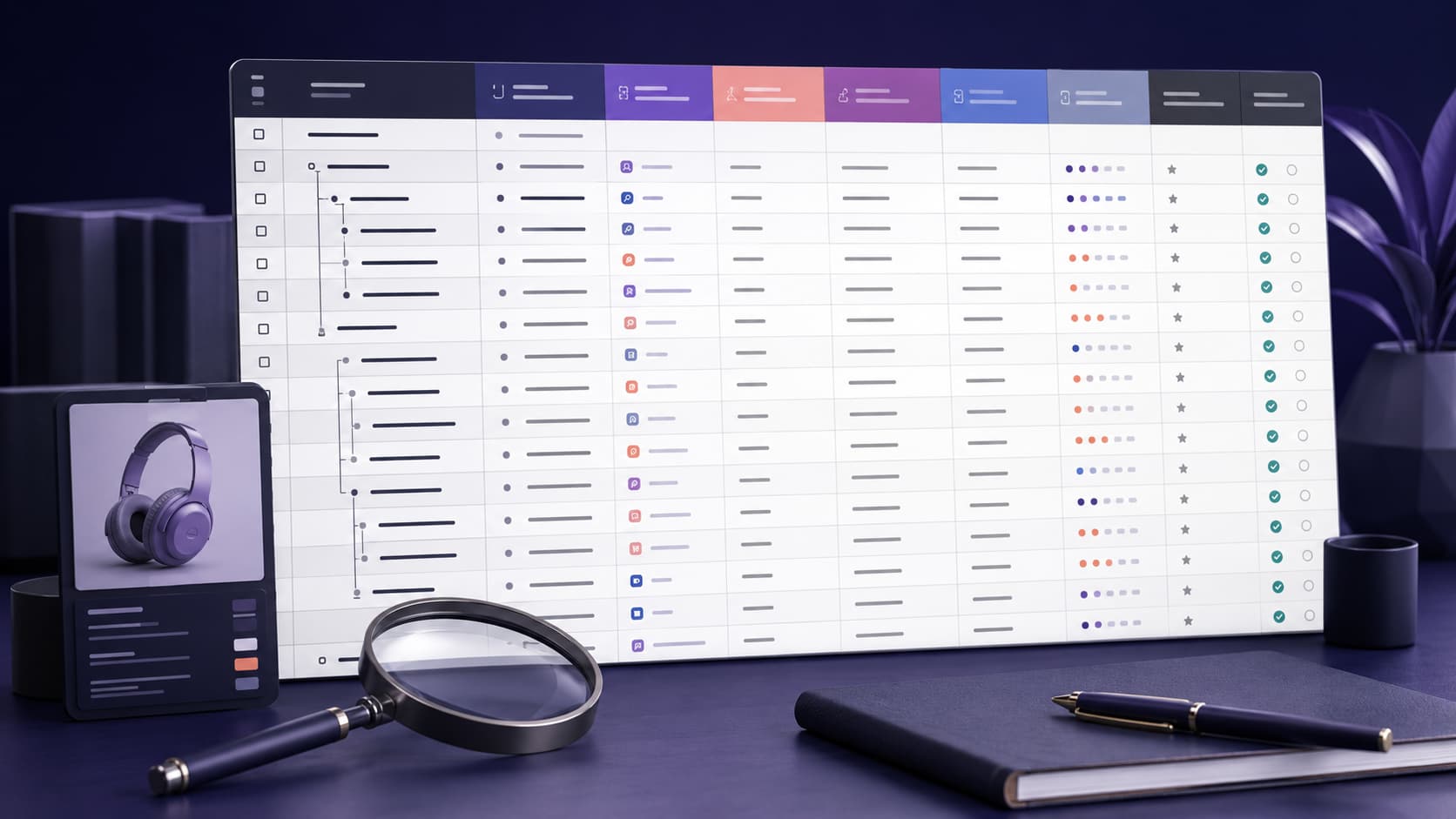
Illustration showing how researched keywords can be organized for later targeting and optimization work.
The main value of the research was not the number of keywords collected. It was turning those keywords into a clearer picture of how people searched around each product.
This helped separate useful product terms from broad or less relevant ideas and created stronger direction for the SEO work that followed.
The resulting keyword set could then support page targeting, content planning and later optimization decisions.
The research created a structured set of product-related search opportunities that could be used to improve how important pages were positioned.
At this stage, the objective was to establish the right search direction rather than claim ranking gains before the later optimization work had been completed.
The keywords discovered during this process were later used in website content and article planning.
Those writing and content tasks are presented as separate Work items so this page stays focused only on the keyword research process.
RankSpheres can research how people search around your products or services and turn that data into clearer SEO targeting.